

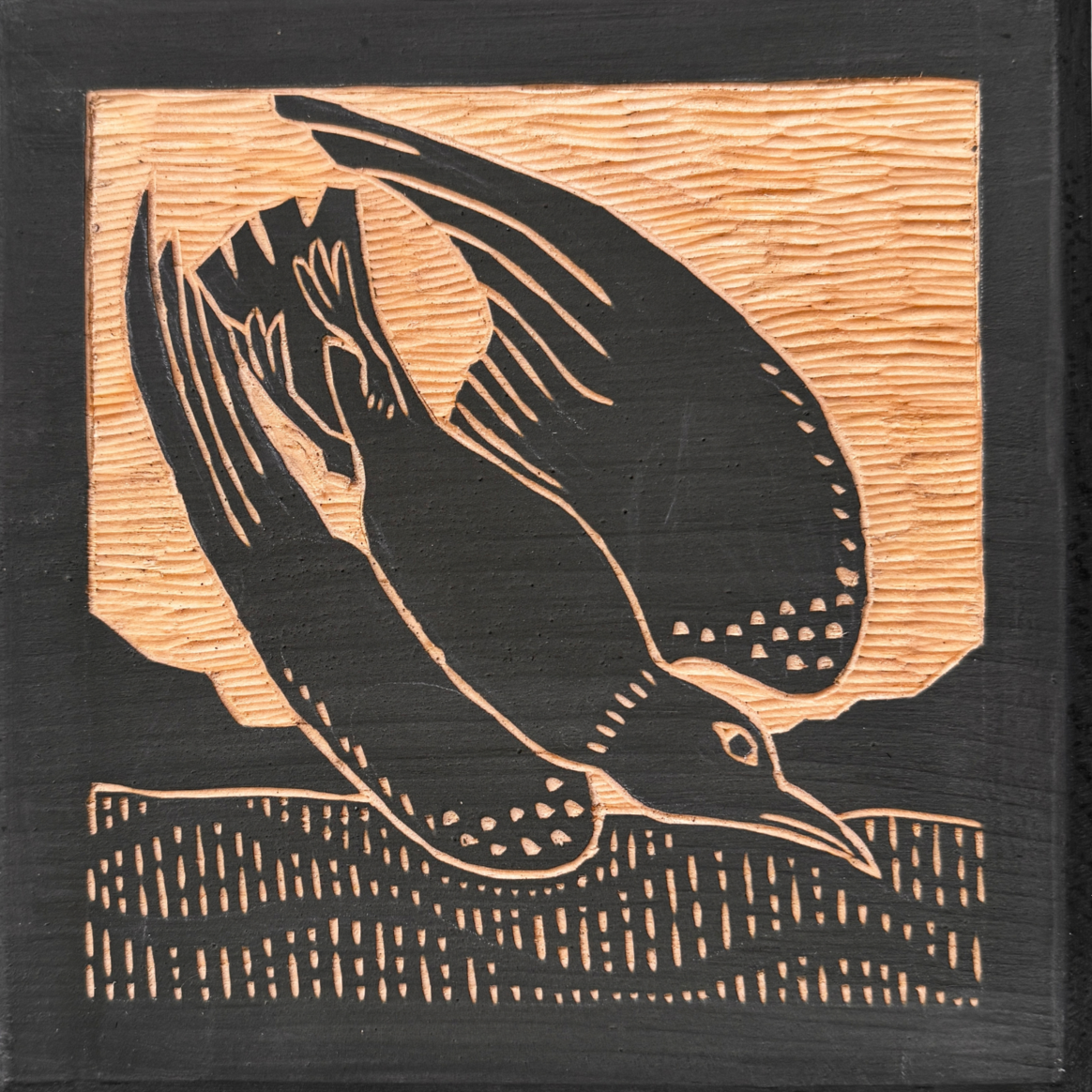
Black Tern
Tompkins County Status: Endangered
5 or fewer extant sites, or
fewer than 1,000 individuals, or
restricted to fewer than 4 U.S.G.S. 7 1/2 minute topographical maps, or
species listed as endangered by the U. S. Department of Interior, as enumerated in the Code of Federal Regulations 50 CFR 17.11.
Chlidonias niger
How to Identify the Black Tern
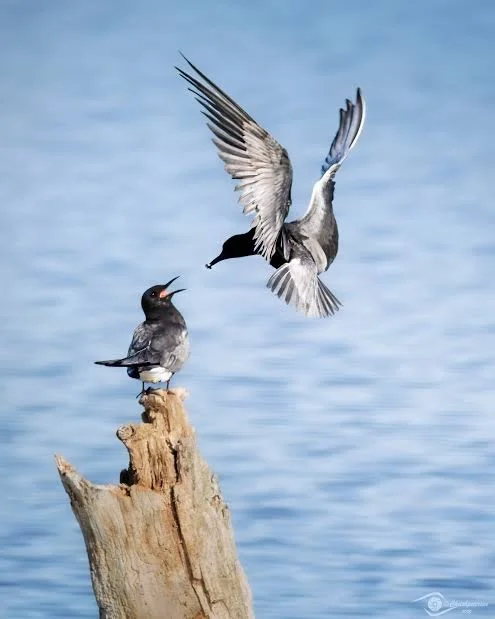
A small tern roughly 25 cm long (≈ 10 in). In the spring and summer breeding season, look for a jet-black head and body, uniform gray wings and tail, dark red feet, and a shrill, metallic "krik" call.
Unlike typical plunge-diving terns, black terns pick insects and small fish directly off the water surface or catch insects in mid-air with agile, erratic flight.
Where to Look
Found in large, shallow inland freshwater wetlands that feature roughly an equal balance of open water and floating vegetation (like cattails).
They nest semi-colonially from May through July, building fragile, shallow floating nests on mats of decaying vegetation or logs.
How to Protect Local Populations
Maintain a slow speed and reduce boat wakes when navigating near marsh edges and shallow bays, as motorized watercraft waves easily wash away their low-lying, floating nests.
Respect designated nesting closures and view birds from a distance to prevent parent terns from being flushed away from incubating eggs or young chicks.
Support wetland restoration programs that manage invasive marsh plants and work to restore natural water-level dynamics required to maintain healthy habitats.
A Note from the Sponsor:
Cornell Cooperative Extension “CCE” Tompkins acts as a local resource hub connecting people with the information they need on topics such as commercial and consumer agriculture; nutrition and health; youth and families; finances; energy efficiency; economic and community development; and sustainable natural resources. Their Smart Energy Choices Program provides free energy advising for homeowners, renters, small businesses, and non-profits through CCE offices all over the Southern Tier of New York State. There are programs available for all income levels for weatherization, heating systems, solar, and utility bill discounts. You can learn more by visiting ccetompkins.org and https://smartenergychoices.org/.