

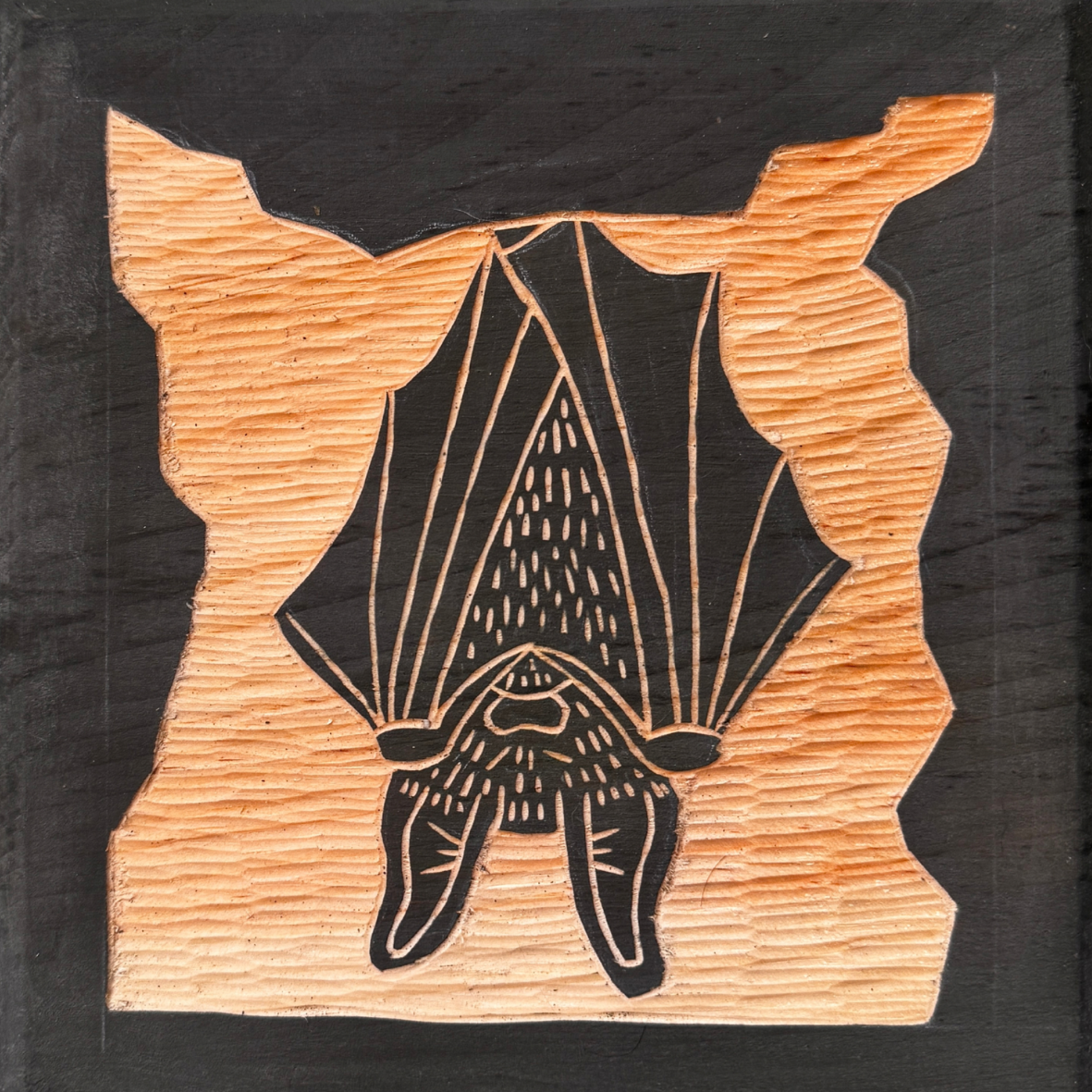
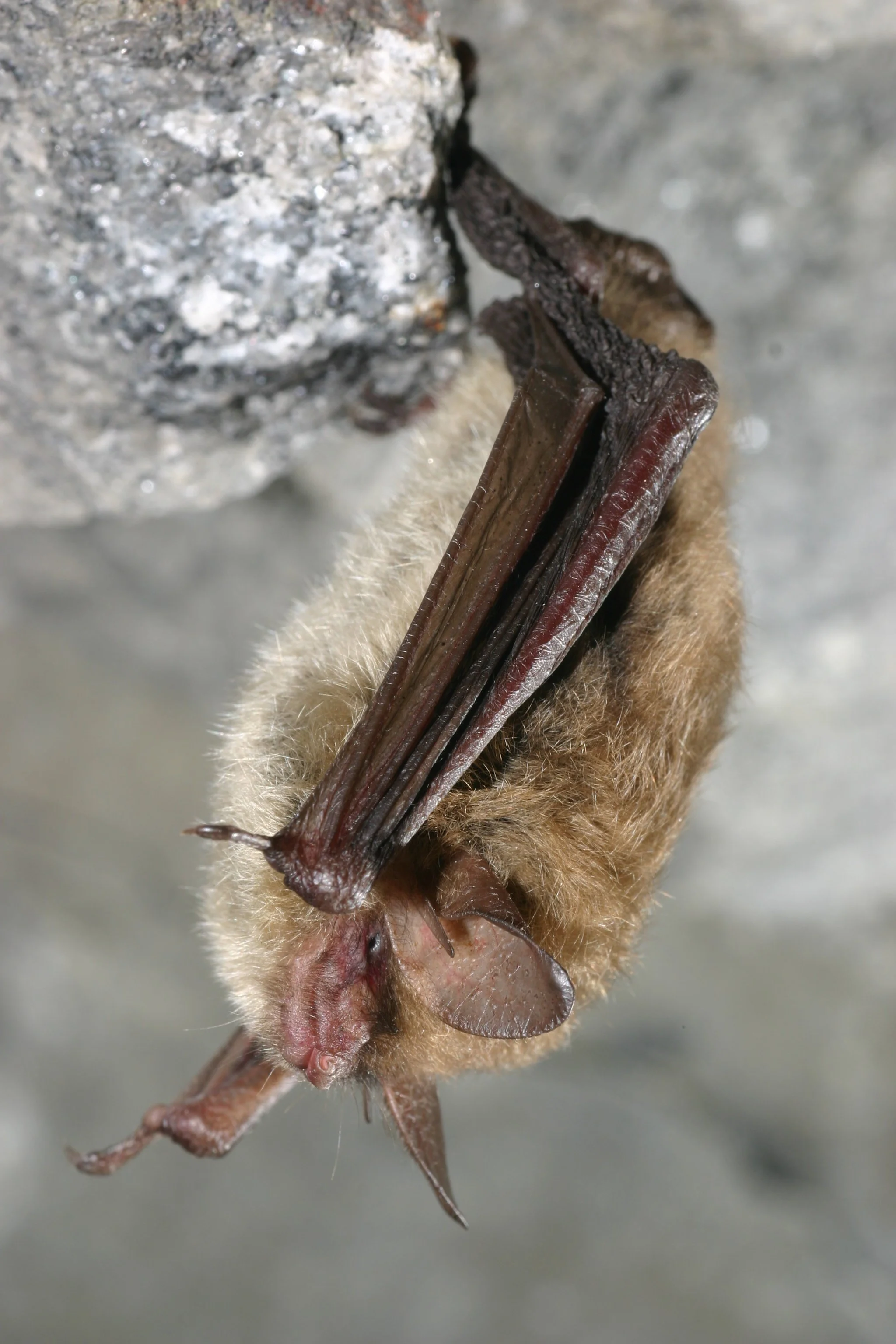
Northern Long-eared Bat
Tompkins County Status: Endangered (Federally Threatened)
5 or fewer extant sites, or
fewer than 1,000 individuals, or
restricted to fewer than 4 U.S.G.S. 7 1/2 minute topographical maps, or
species listed as endangered by the U. S. Department of Interior, as enumerated in the Code of Federal Regulations 50 CFR 17.11.
Myotis septentrionalis
How to Identify the Northern Long-eared Bat
A small bat with a wingspan of 23–26 cm (9–10 in) and medium-to-dark brown fur. As its name implies, it is best distinguished from other bat species by its notably long ears that extend beyond its nose when folded forward.
In spring and summer, females form small maternity colonies under loose tree bark or in tree cavities, emerging at dusk to hunt insects in dense forest understories using slow, maneuverable flight.
Where to Look
Overwinters from late fall through early spring in humid caves and abandoned mines with constant cold temperatures and minimal airflow.
Spends late spring and summer in forested habitats, roosting under decaying tree bark and foraging along forest trails, canopy gaps, and streams.
How to Protect Local Populations
Avoid entering caves or abandoned mines during winter hibernation months (October through April); waking hibernating bats causes them to burn critical fat reserves needed to survive the winter.
Retain dead, dying, or hollow trees (snags) with loose bark on private woodlots whenever safe, as these provide crucial roosting and maternity site habitat during spring and summer.
Follow all cave gear gear-decontamination protocols before and after visiting caves or mines to prevent spreading the fungus (Pseudogymnoascus destructans) responsible for White-nose Syndrome.
A Note from the Sponsor:
Cornell Cooperative Extension “CCE” Tompkins acts as a local resource hub connecting people with the information they need on topics such as commercial and consumer agriculture; nutrition and health; youth and families; finances; energy efficiency; economic and community development; and sustainable natural resources. Their Smart Energy Choices Program provides free energy advising for homeowners, renters, small businesses, and non-profits through CCE offices all over the Southern Tier of New York State. There are programs available for all income levels for weatherization, heating systems, solar, and utility bill discounts. You can learn more by visiting ccetompkins.org and https://smartenergychoices.org/.