


Northern Wild Comfrey
Tompkins County Status: Endangered
5 or fewer extant sites, or
fewer than 1,000 individuals, or
restricted to fewer than 4 U.S.G.S. 7 1/2 minute topographical maps, or
species listed as endangered by the U. S. Department of Interior, as enumerated in the Code of Federal Regulations 50 CFR 17.11.
Andersonglossum boreale
How to Identify
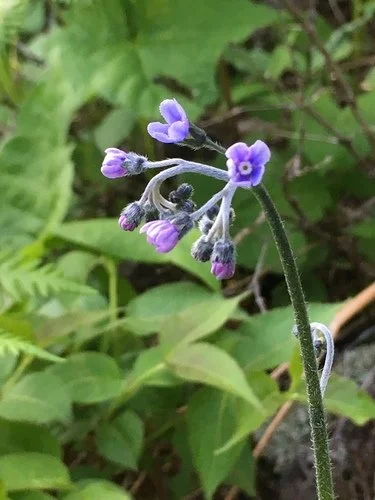
A small, upright perennial growing up to 61 cm tall (≈ 2 ft). It features oval basal leaves 10–20 cm long (4–8 in) and upper leaves that directly clasp the stem, topped by a branching cluster of small, five-petaled blue flowers that produce bristly nutlet fruits.
Typically blooms in late spring to early summer (late May through June).
Where to Look
Found in boreal coniferous and mixed woods, particularly in cool, dry-to-mesic upland forests with rocky or sandy soils.
Highly sensitive to canopy clearing and soil compaction, making it rare in fragmented or heavily disturbed habitats.
How to Protect Local Populations
Avoid disturbing wild populations or attempting to dig up plants, as wild comfrey relies on stable forest soil structures and seed dispersal mechanisms that do not adapt well to residential gardens.
Stay on designated trails when hiking through rocky woodlands to prevent trampling delicate basal leaves and compacting the soil around vulnerable roots.
Support local forest conservation efforts that protect intact canopy coverage and limit heavy logging or invasive plant encroachment in native woodland habitats.
A Note from the Sponsor:
Cornell Cooperative Extension “CCE” Tompkins acts as a local resource hub connecting people with the information they need on topics such as commercial and consumer agriculture; nutrition and health; youth and families; finances; energy efficiency; economic and community development; and sustainable natural resources. Their Smart Energy Choices Program provides free energy advising for homeowners, renters, small businesses, and non-profits through CCE offices all over the Southern Tier of New York State. There are programs available for all income levels for weatherization, heating systems, solar, and utility bill discounts. You can learn more by visiting ccetompkins.org and https://smartenergychoices.org/.